Una visión de cooperación internacional para transformar una problemática histórica
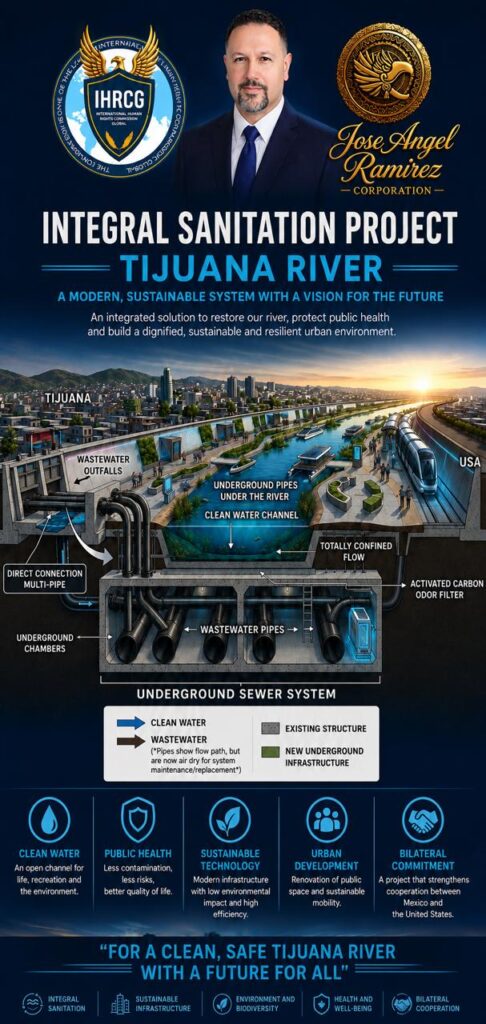
El saneamiento del Río Tijuana representa uno de los grandes desafíos ambientales, sanitarios y de infraestructura de nuestra región. Por su magnitud, considero necesario pensar más allá de soluciones parciales y plantear un proyecto integral, moderno y de largo alcance, capaz de transformar el manejo de las aguas residuales y recuperar progresivamente este importante corredor urbano y ambiental.
Una obra de esta dimensión requeriría una inversión multimillonaria, tecnología especializada, ingeniería de gran escala y capacidad para ejecutar infraestructura compleja. Por ello, considero que México y el Gobierno de Baja California podrían explorar, mediante los canales diplomáticos e institucionales correspondientes, posibles esquemas de cooperación, financiamiento, transferencia tecnológica y participación empresarial con la República Popular China, país con amplia experiencia en grandes proyectos de infraestructura.
La propuesta tendría que desarrollarse con absoluta transparencia, estudios técnicos y ambientales rigurosos, licitaciones conforme a la legislación mexicana, protección del interés público y respeto pleno a la soberanía nacional. La cooperación internacional debe entenderse como una herramienta para sumar capacidades, no como sustitución de las responsabilidades de nuestras instituciones.
El Proyecto de Saneamiento Integral del Río Tijuana podría contemplar colectores y conducciones subterráneas para aguas residuales, plantas y sistemas avanzados de tratamiento, control de olores, recuperación de agua, infraestructura hidráulica moderna, monitoreo permanente y rehabilitación ambiental y urbana del corredor del río.
Y la visión podría ir todavía más lejos: si un modelo de esta naturaleza demuestra viabilidad técnica, financiera y ambiental, podría estudiarse su adaptación a otras ciudades y cuencas de México que enfrentan graves problemas de contaminación y aguas residuales.
Tijuana, por su condición fronteriza, puede convertirse en un referente de innovación ambiental y cooperación internacional. No se trata solamente de sanear un río; se trata de proteger la salud pública, recuperar nuestro medio ambiente y construir infraestructura para las próximas generaciones.
México necesita pensar en grande, planear con responsabilidad y buscar las mejores capacidades disponibles en el mundo.
Dr. José Ángel Ramírez
Tijuana, Baja California, México
COMPREHENSIVE TIJUANA RIVER SANITATION PROJECT
A vision of international cooperation to transform a long-standing issue
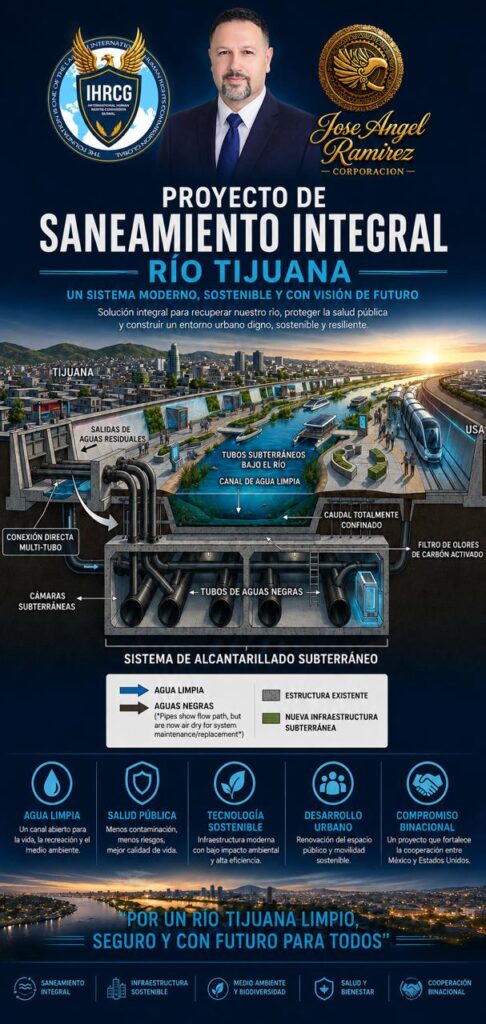
Sanitizing the Tijuana River represents one of the major environmental, public health, and infrastructure challenges facing our region. Given the scale of the issue, I believe it is necessary to look beyond piecemeal solutions and propose a comprehensive, modern, and far-reaching project capable of transforming wastewater management and progressively restoring this vital urban and environmental corridor.
A project of this magnitude would require multi-million dollar investment, specialized technology, large-scale engineering, and the capacity to execute complex infrastructure works. Therefore, I believe that Mexico and the Government of Baja California could explore—through appropriate diplomatic and institutional channels—potential frameworks for cooperation, financing, technology transfer, and business partnerships with the People’s Republic of China, a country with extensive experience in major infrastructure projects.
The proposal would need to be developed with absolute transparency, rigorous technical and environmental studies, and bidding processes that comply with Mexican law, all while safeguarding the public interest and fully respecting national sovereignty. International cooperation should be viewed as a tool to pool capabilities, not as a substitute for the responsibilities of our own institutions.
The Comprehensive Tijuana River Sanitation Project could encompass underground wastewater collectors and conduits, advanced treatment plants and systems, odor control, water reclamation, modern hydraulic infrastructure, continuous monitoring, and the environmental and urban rehabilitation of the river corridor.
The vision could extend even further: if a model of this nature proves technically, financially, and environmentally viable, its adaptation could be explored for other cities and watersheds in Mexico facing serious pollution and wastewater challenges.
Due to its status as a border city, Tijuana has the potential to become a benchmark for environmental innovation and international cooperation. This is not merely about cleaning up a river; it is about protecting public health, restoring our environment, and building infrastructure for future generations.
Mexico needs to think big, plan responsibly, and seek out the best capabilities available worldwide.
Dr. José Ángel Ramírez
Tijuana, Baja California, Mexico